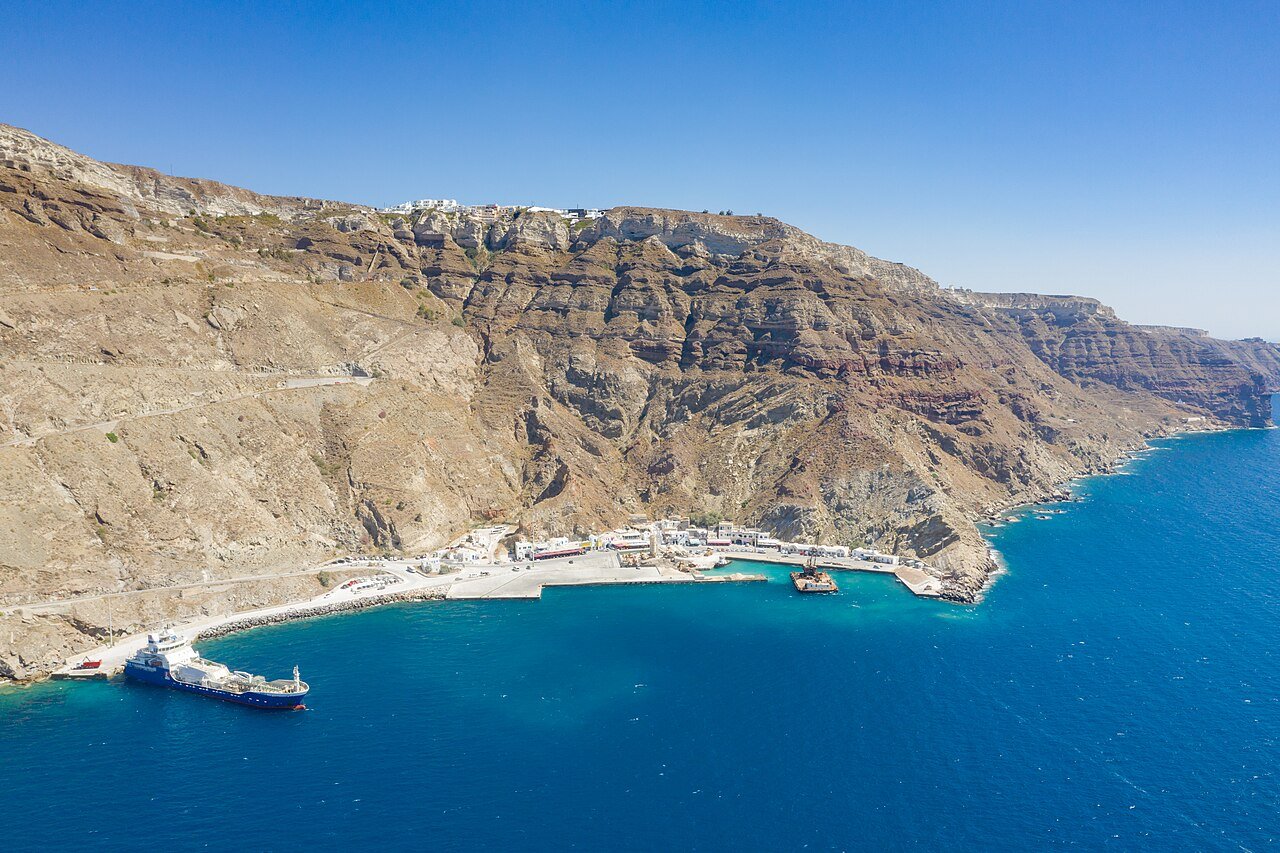
Santorini’s main commercial port, Athinios Port (also known as the “New Port”), is one of the most notoriously chaotic maritime hubs in the Mediterranean. Carved directly into the base of a sheer 300-meter volcanic cliff, it was originally built for freight rather than thousands of tourists rolling luggage off high-speed catamarans.
If you have a ferry scheduled, here is how to navigate the port without missing your connection or overpaying for transfers.
1. The Steep Switchback Bottleneck
The only road leading from Athinios Port up to the rest of the island is a single two-lane road with dramatic hairpin turns. When two large ferries dock simultaneously:
- Over 1,500 foot passengers, dozens of tour buses, trucks, and rental cars hit that single road at the exact same moment.
- Traffic jams can back up for over 45 minutes on the cliffside incline alone.
The Golden Rule: Always allow at least 90 minutes to 2 hours to reach Athinios Port before your ferry departs, particularly between 11:00 AM and 4:00 PM during peak ferry hours.
2. Navigating Taxis vs. Pre-Booked Transfers
One of the biggest complaints from newly arrived travelers is taxi availability:
- There are fewer than 40 licensed municipal taxis servicing the entire island of Santorini.
- When a ferry carrying hundreds of passengers docks, finding an unreserved taxi at the rank is virtually impossible.
- Unofficial drivers frequently quote exorbitant flat rates (often €60 to €90 for a 20-minute ride to Fira or Oia).
Solution: Always book a private or shared shuttle in advance through a reputable transfer company or your hotel, or take the public KTEL bus which meets every arriving scheduled passenger ferry and costs less than €3 per person into Fira central station.
3. High-Speed Catamaran vs. Conventional Ferries
Travelers frequently ask whether they should book high-speed catamarans (like Seajets) or large conventional vessels (like Blue Star Ferries):
- High-Speed Boats: Faster transit times, but smaller hulls make them far more susceptible to the Meltemi (the strong northern summer wind). In choppy seas, seasickness is widespread, and departures are often delayed or cancelled.
- Large Conventional Ferries: Slightly slower, but rock-steady in windy conditions, rarely cancelled, and offer open-air observation decks where you can watch the caldera cliffs loom as you approach.
4. Port Facilities: Set Your Expectations
Athinios is functional, not comfortable. Waiting areas are cramped, seating during mid-day arrivals is scarce, and food options are basic coffee kiosks. Keep water on hand and stay aware of your ferry’s name and company, as vessel arrivals are called on loudspeaker only moments before gangways lower.